
If you have had acne, you may notice dark spots, red marks, uneven texture or depressions on your skin even after the active pimples have disappeared. These changes are often described as “acne scars,” but not every mark left after acne is actually a scar.
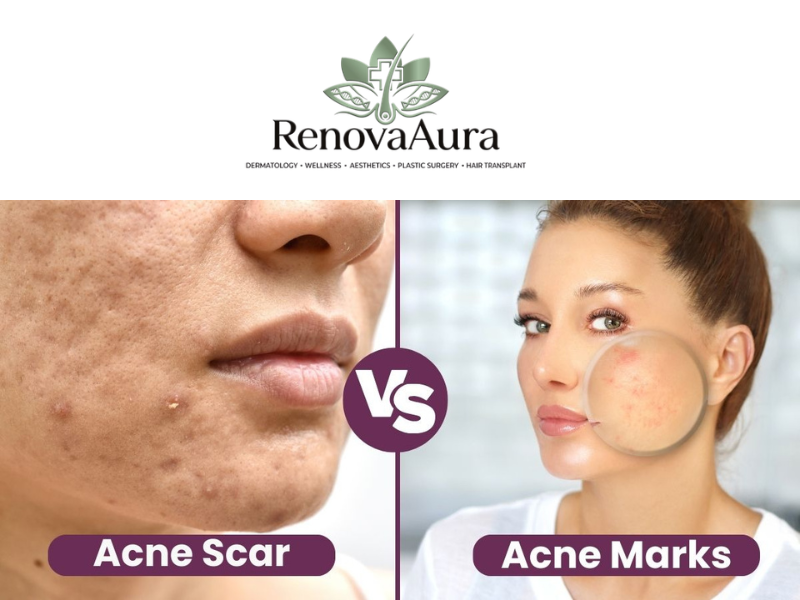
The key difference is simple: acne marks usually refer to temporary changes in skin colour after a pimple heals, while acne scars involve a change in the skin’s texture or structure.
Because they are different concerns, the most suitable treatment can also be different. Identifying whether you have acne marks, pigmentation or true acne scarring is an important first step before choosing a treatment.
Acne Marks vs Acne Scars: What Is the Difference?
Acne marks are generally changes in skin colour that remain after inflammation has settled. They may appear red, pink, brown or darker than the surrounding skin.
Acne scars, on the other hand, involve a change in the skin’s texture or structure. They can appear as depressions in the skin or, less commonly, raised areas.
| Feature | Acne Marks | Acne Scars |
|---|---|---|
| Main change | Skin colour | Skin texture or structure |
| Common appearance | Red, pink or dark spots | Pits, depressions or raised scars |
| Skin surface | Usually smooth | May be uneven |
| Can they fade naturally? | Many gradually improve | Usually less likely to disappear completely on their own |
| Treatment approach | Often focuses on pigmentation and inflammation | May require procedures targeting scar texture |
| Diagnosis needed? | Helpful | Important before selecting treatment |
What Are Acne Marks?
Acne marks are commonly used to describe discolouration that remains after acne has healed.
They may occur because inflammation from acne temporarily changes the skin’s pigment or causes persistent redness.
Post-Inflammatory Hyperpigmentation
Post-inflammatory hyperpigmentation, or PIH, refers to darker areas that develop after skin inflammation or injury. Acne is a common trigger.
PIH can be more noticeable in people with darker skin tones and may take time to fade.
Post-Inflammatory Erythema
Some people develop red or pink areas after acne heals. These are often referred to as post-inflammatory erythema.
Unlike pigmentation, the main visible change is redness rather than increased pigment.
What Are Acne Scars?
True acne scars occur when inflammation associated with acne damages the structures of the skin and affects collagen formation during healing.
Acne scars are generally divided into atrophic scars and raised scars.
Atrophic Acne Scars
These scars appear as depressions or indentations in the skin.
Common types include:
- Ice pick scars: Small, narrow and deeper-looking depressions.
- Boxcar scars: Wider depressions with more defined edges.
- Rolling scars: Broader depressions that can create an uneven or wavy skin surface.
Different scar types can occur on the same face, and the treatment approach may vary depending on their depth and characteristics.
Raised Acne Scars
Some people develop raised scars after inflammation or injury. These are more common in certain individuals and may require a different treatment approach from depressed acne scars.
How Can You Tell If You Have Acne Marks or Acne Scars?
A simple way to think about the difference is to look at colour versus texture.
If the skin feels relatively smooth but there is a darker, red or pink area where acne previously occurred, it may be a post-acne mark.
If you can see or feel a depression, indentation or raised area in the skin, it may be an acne scar.
However, some people have both pigmentation and scarring at the same time. A dermatologist can assess the skin and determine what type of post-acne changes are present.
What Treatments Help Acne Marks?
Treatment for acne marks depends on the type of mark, skin tone, severity and whether active acne is still present.
A dermatologist may consider approaches such as:
Sunscreen
Daily broad-spectrum sunscreen is an important part of managing pigmentation because UV exposure can make some dark marks more noticeable and may contribute to persistent pigmentation.
Topical Treatments
Depending on the type of pigmentation and the individual’s skin, a dermatologist may recommend topical ingredients that help regulate pigmentation or support skin renewal.
The choice should be based on skin type and the cause of the pigmentation.
Chemical Peels
Certain chemical peels may be used for selected types of post-acne pigmentation. The appropriate peel, concentration and treatment schedule depend on the patient’s skin and clinical assessment.
Laser or Light-Based Treatments
Selected pigmentation or redness may sometimes be treated using laser or light-based procedures. These treatments are not appropriate for every skin type, and the risk of pigmentation changes needs to be considered.
What Treatments Help Acne Scars?
Acne scar treatment is different because the goal is often to improve skin texture and the appearance of depressions or raised scars, rather than simply reducing pigmentation.
Depending on the scar type and skin characteristics, treatment options may include:
Microneedling
Microneedling uses controlled micro-injuries to stimulate the skin’s healing response. It may be considered for selected types of atrophic acne scars.
Fractional Laser Treatments
Fractional laser treatments can target portions of the skin to stimulate remodelling and may be considered for certain acne scars.
The suitability of laser treatment depends on factors such as scar type, skin tone and previous treatment history.
Subcision
Subcision may be considered for selected rolling or tethered acne scars. The procedure releases fibrous bands beneath the skin that contribute to the depressed appearance of certain scars.
Combination Treatments
Some people have more than one type of acne scar. A dermatologist may therefore recommend a combination approach rather than relying on a single procedure.
The treatment plan should be based on the type, depth and distribution of the scars.
Can Acne Marks Turn Into Acne Scars?
Acne marks and acne scars are different processes, so an acne mark does not simply “turn into” a scar.
However, new or repeatedly inflamed acne can cause additional skin injury and may increase the risk of developing permanent scarring, particularly when lesions are severe or repeatedly picked or squeezed.
This is one reason why controlling active acne is an important part of preventing future acne scars.
Does Picking Acne Cause Scars?
Picking, squeezing or repeatedly irritating acne can increase inflammation and damage the surrounding skin.
This may increase the risk of prolonged marks and, in some cases, scarring.
If acne is persistent or difficult to control, treating the underlying acne is generally more useful than repeatedly trying to remove individual pimples.
Can Acne Scars Go Away on Their Own?
Some mild post-acne marks may gradually become less noticeable over time.
True acne scars are different. Structural changes in the skin generally do not disappear completely on their own, although their appearance may become less noticeable.
Treatment can sometimes improve the appearance of acne scars, but results depend on factors such as scar type, severity, skin characteristics and the treatment used.
What Is the Best Treatment for Acne Scars?
There is no single best acne-scar treatment for everyone.
The appropriate treatment depends primarily on the type of scar.
For example, rolling scars, boxcar scars and ice pick scars have different structures and may respond differently to treatment.
A dermatologist may assess:
- Scar type
- Scar depth
- Skin texture
- Skin tone
- Active acne
- Pigmentation
- Previous treatments
- Risk of post-inflammatory pigmentation
This assessment helps determine whether one treatment or a combination approach is appropriate.
Can Acne Marks and Acne Scars Be Treated at the Same Time?
Sometimes, yes.
A person may have active acne, pigmentation and structural acne scars at the same time. In such cases, treatment may need to be planned in stages.
For example, controlling active acne may be prioritised before performing procedures aimed at improving scar texture.
The order and combination of treatments should be determined after examining the skin.
How Long Do Acne Marks and Scars Take to Improve?
The timeline varies significantly.
Acne marks may gradually fade over time, although some pigmentation can persist for months or longer.
Acne scars are structural changes and generally require a different approach. Improvement after procedures is usually gradual, and multiple treatment sessions may sometimes be recommended depending on the type and severity of scarring.
No specific result or timeline can be guaranteed because individual responses vary.
When Should You See a Dermatologist for Acne Scars or Marks?
Consider consulting a dermatologist if:
- Acne keeps returning.
- Dark marks are becoming persistent.
- You have visible depressions or raised scars.
- Over-the-counter products are not helping.
- You are unsure whether you have pigmentation or scarring.
- You are considering chemical peels, microneedling or laser treatment.
- Acne is affecting your confidence or daily life.
An accurate diagnosis can prevent you from choosing a treatment that does not address the actual cause of the skin concern.
Acne Scars vs Acne Marks: The Bottom Line
Acne marks primarily affect skin colour, while acne scars involve changes in skin texture or structure.
Marks such as post-inflammatory hyperpigmentation or redness may gradually improve and can sometimes be managed with topical treatments, sunscreen, peels or selected procedures.
Acne scars generally require treatment approaches designed to address changes in skin texture. Options may include microneedling, fractional laser treatments, subcision or combinations of procedures, depending on the scar type.
If you are unsure whether you have acne marks, pigmentation or true acne scars, a dermatologist can assess your skin and recommend an approach based on your individual condition.
Frequently Asked Questions
What is the difference between acne scars and acne marks?
Acne marks are usually changes in skin colour, such as dark spots or redness, while acne scars involve structural or textural changes such as depressions or raised areas.
Are acne marks permanent?
Not necessarily. Many post-acne marks gradually fade, although the time required can vary depending on the type of mark, skin tone and other factors.
Do acne scars go away naturally?
True acne scars are structural changes in the skin and are less likely to disappear completely without treatment. Their appearance may improve over time, but persistent scars may require professional treatment.
Which is easier to treat, acne marks or acne scars?
Acne marks can often be easier to manage than structural acne scars, but treatment depends on the specific type of mark or scar and the individual’s skin.
What is the best treatment for acne scars?
There is no universal treatment. The most suitable option depends on whether the scars are ice pick, boxcar, rolling or raised scars, as well as the patient’s skin characteristics.
Can chemical peels remove acne scars?
Chemical peels may help selected skin concerns and some superficial acne-related changes, but they do not remove every type of acne scar. A dermatologist can determine whether a peel is appropriate.
Does microneedling help acne scars?
Microneedling may improve the appearance of selected atrophic acne scars by stimulating the skin’s healing and collagen-remodelling response. Suitability depends on the individual.
Can acne marks become acne scars?
An acne mark does not simply turn into a scar. However, ongoing severe inflammation, picking or squeezing acne can increase the risk of developing additional scars.
Should I treat active acne before acne scars?
Often, controlling active acne is an important first step because new acne lesions can lead to additional inflammation, marks and scarring.
Can a dermatologist treat both acne scars and pigmentation?
Yes. A dermatologist can assess whether pigmentation and acne scars are present together and develop a treatment plan that addresses the different concerns appropriately