
Hair loss in women can be caused by several factors, including female pattern hair loss, hormonal changes, nutritional deficiencies, medical conditions, and certain types of scarring alopecia. For some women, a hair transplant may be an appropriate option when hair loss has resulted in areas of permanent thinning and there is sufficient healthy donor hair.
But is a hair transplant suitable for every woman with hair loss? No. The right approach depends on the cause of hair loss, the condition of the scalp, the stability of hair loss, the availability of donor hair, and the individual’s overall treatment goals.
A consultation with a qualified dermatologist or hair transplant surgeon can help determine whether hair transplantation is appropriate or whether another treatment should be considered first.
What Is a Hair Transplant for Women?
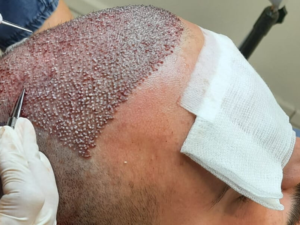
A hair transplant is a surgical procedure that moves healthy hair follicles from a donor area, usually the back or sides of the scalp, to areas where hair density has been reduced.
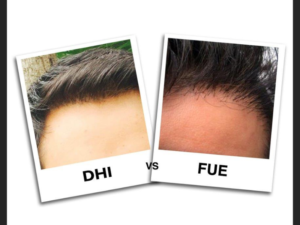
The transplanted follicles are intended to grow hair in the recipient area over time. Techniques such as Follicular Unit Extraction (FUE) may be used to harvest individual follicular units.
However, female hair loss can have different patterns and causes from male pattern hair loss. This makes proper diagnosis and patient selection particularly important before considering transplantation.
When Is Hair Transplant Considered for Women?
A woman may be considered for hair transplantation when:
- Hair loss has caused a stable area of thinning or reduced density.
- The underlying cause of hair loss has been identified.
- The affected area is unlikely to recover sufficiently with medical treatment alone.
- There is adequate healthy donor hair.
- The scalp is suitable for transplantation.
- The patient has realistic expectations about what a transplant can achieve.
- Future hair loss has been considered as part of the treatment plan.
A transplant is not simply a way to add hair to any area that appears thin. The cause and pattern of hair loss need to be assessed first.
What Causes Hair Loss in Women?
Female hair loss can have many possible causes. Some are temporary or treatable, while others may result in progressive or permanent hair loss.
Common causes include:
Female Pattern Hair Loss
Female pattern hair loss is a common cause of gradual thinning in women. It may appear as widening of the central parting, reduced density over the top of the scalp, or increased visibility of the scalp.
The pattern and severity can vary considerably between individuals.
Telogen Effluvium
Telogen effluvium can cause increased hair shedding, sometimes after factors such as significant stress, illness, major weight changes, nutritional problems, or hormonal changes.
Because this type of shedding may improve when the underlying trigger is addressed, a hair transplant is generally not the first step when the hair loss is temporary.
Hormonal Changes
Pregnancy, postpartum changes, menopause and certain hormonal conditions can affect the hair growth cycle.
Women experiencing significant hair loss associated with hormonal or medical concerns may require evaluation and treatment of the underlying issue before considering surgery.
Nutritional Deficiencies
Deficiencies involving nutrients such as iron or other essential nutrients may contribute to hair shedding in some people.
Appropriate evaluation can help determine whether nutritional factors are contributing to the problem.
Scarring Alopecia
Some inflammatory or autoimmune scalp conditions can damage hair follicles and cause permanent hair loss.
In cases of scarring alopecia, transplantation requires particularly careful assessment. The underlying disease generally needs to be inactive or adequately controlled before surgery is considered.
Who May Be a Good Candidate for a Hair Transplant?
There is no single checklist that determines candidacy for every woman, but several factors can help guide the decision.
1. Your Hair Loss Has Been Properly Diagnosed
Before discussing transplantation, the cause of hair loss should be established.
If the shedding is caused by a temporary condition, treating the underlying cause may be more appropriate than surgery.
2. You Have Adequate Donor Hair
Hair transplantation requires a reliable donor supply.
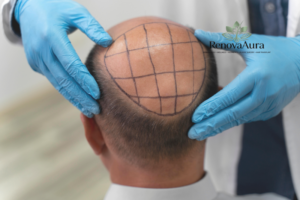
The surgeon will assess the density, quality and characteristics of hair in the donor area to determine whether enough suitable follicles are available.
3. Your Hair Loss Pattern Is Suitable
Some women have diffuse thinning throughout the scalp rather than clearly defined areas of hair loss.
If the donor area is also significantly affected, transplantation may not provide an appropriate solution.
4. Your Scalp Is Healthy
Active scalp inflammation, infection or certain untreated scalp disorders may need to be addressed before a surgical procedure is considered.
5. You Have Realistic Expectations
A hair transplant does not recreate the density of naturally growing hair in every case.
The objective is to improve hair coverage and appearance using the available donor hair while preserving the donor supply for long-term planning.
When Might a Hair Transplant Not Be the First Choice?
A transplant may not be the most appropriate initial treatment when hair loss is:
- Sudden or unexplained
- Actively progressing
- Caused by a potentially reversible condition
- Associated with significant scalp inflammation
- Due to nutritional or hormonal factors that have not been addressed
- Diffuse enough to affect the donor area
- Not associated with sufficient donor hair
In these situations, identifying and managing the underlying cause may be more important than immediately considering surgery.
Hair Transplant for Women vs Hair Transplant for Men
Although the basic principle of moving healthy follicles from one area to another is similar, the evaluation can differ.
Women commonly present with diffuse thinning or widening of the central part, while men more frequently develop a predictable recession and crown pattern associated with androgenetic hair loss.
This does not mean every woman or man follows the same pattern.
For women, careful assessment of the donor area and the overall distribution of hair density is especially important when determining whether transplantation is likely to be suitable.
What Happens During a Hair Transplant Consultation?
A proper consultation should begin with understanding the patient’s hair-loss history rather than immediately selecting a procedure.
The evaluation may include:
- Discussion of when the hair loss started.
- Assessment of the pattern and progression of hair loss.
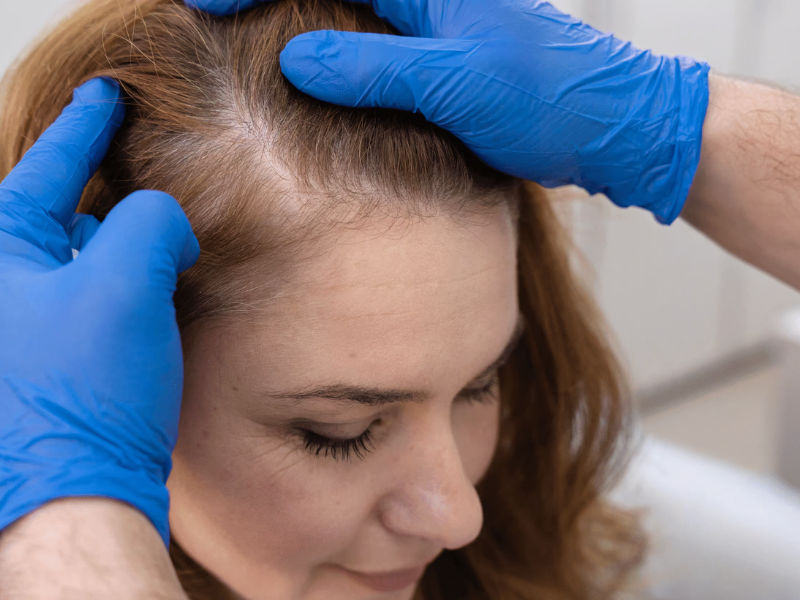
- Examination of the scalp and donor area.
- Review of relevant medical, hormonal or nutritional factors.
- Assessment of hair density and follicular characteristics.
- Discussion of previous treatments.
- Evaluation of whether medical treatment may be appropriate.
- Discussion of potential surgical options if the patient is a suitable candidate.
The exact evaluation varies from person to person.
Can Women With Long Hair Have a Hair Transplant?
Having long hair does not automatically prevent a woman from undergoing hair transplantation.
The surgical approach and preparation of the donor area depend on factors such as the technique being used, the number of grafts required and the surgeon’s approach.
The patient’s hairstyle and personal preferences can be discussed during consultation.
Can a Hair Transplant Treat a Receding Hairline in Women?
In selected women, transplantation may be considered for areas such as the frontal hairline when there is appropriate donor hair and the cause of hair loss has been established.
However, a receding or thinning hairline can have different causes, so diagnosis is important before deciding whether transplantation is appropriate.
Is a Hair Transplant Permanent for Women?
Transplanted follicles can provide long-term hair growth, but the overall appearance of the scalp can still change if existing, non-transplanted hair continues to thin.
For this reason, long-term planning is important.
The durability of a transplant should not be interpreted as a guarantee that all hair loss will stop or that the same density will remain indefinitely.
What Other Treatments May Be Considered Before a Hair Transplant?
Depending on the cause of hair loss, a dermatologist may consider non-surgical approaches before or alongside transplantation.
These can include:
- Treatment of an underlying scalp condition
- Management of nutritional deficiencies when present
- Medical treatment for appropriate types of hair loss
- Hair-loss monitoring
- Lifestyle and hair-care guidance where relevant
The appropriate treatment depends on the diagnosis. Not every hair-loss treatment is suitable for every woman.
Why Diagnosis Matters Before Choosing a Hair Transplant
Hair loss is a symptom rather than a single disease.
Two women may have similar-looking thinning but completely different underlying causes. One may have a condition that responds to medical management, while another may have permanent follicular loss that could potentially be considered for transplantation.
This is why a diagnosis should come before deciding on a surgical technique.
Hair Transplant for Women: Key Takeaway
A hair transplant can be an option for selected women with suitable patterns of permanent hair loss and an adequate donor supply. However, it is not automatically the right treatment for every woman experiencing hair thinning or excessive shedding.
The first step is to determine why the hair is falling out, whether the condition is stable, how much healthy donor hair is available, and what treatment options are appropriate.
An individualized assessment by a dermatologist or qualified hair transplant surgeon can help determine whether hair transplantation is suitable for you.
Frequently Asked Questions
Is hair transplant suitable for women?
Yes, hair transplantation can be suitable for some women, particularly when there is an appropriate pattern of permanent hair loss and sufficient healthy donor hair. However, candidacy depends on the cause and pattern of hair loss.
What is the best age for a hair transplant for women?
There is no single ideal age. The cause, stability and pattern of hair loss, donor availability and future progression are more important factors than age alone.
Can women with female pattern hair loss get a hair transplant?
Some women with female pattern hair loss may be candidates, but diffuse thinning can make transplantation unsuitable in certain cases. A detailed assessment of the donor and recipient areas is important.
Can a hair transplant fix thinning hair in women?
It may improve coverage in selected areas, but it cannot necessarily restore all lost density. Whether it is appropriate depends on the cause and distribution of thinning and the availability of donor hair.
Is a woman’s hair transplant permanent?
Transplanted follicles can provide long-term growth, but non-transplanted hair may continue to thin depending on the underlying condition. Long-term hair-loss management may therefore remain important.
Can women with PCOS-related hair loss have a hair transplant?
Hair loss associated with hormonal conditions such as PCOS requires evaluation of the underlying cause and the pattern of hair loss. A transplant may be considered in selected cases, but it is not automatically the first treatment.
Does hair transplant leave scars in women?
Hair transplantation involves surgical removal and placement of follicular units, so some degree of scarring is possible. The appearance depends on the technique, individual healing and surgical factors.
How long does it take to see hair transplant results?
Hair growth after transplantation is gradual and varies between individuals. The treating surgeon should explain the expected timeline based on the procedure and the patient’s circumstances.
Can a dermatologist determine whether I need a hair transplant?
A dermatologist with expertise in hair disorders can evaluate the cause and pattern of hair loss and help determine whether medical treatment, transplantation or another approach may be appropriate.