
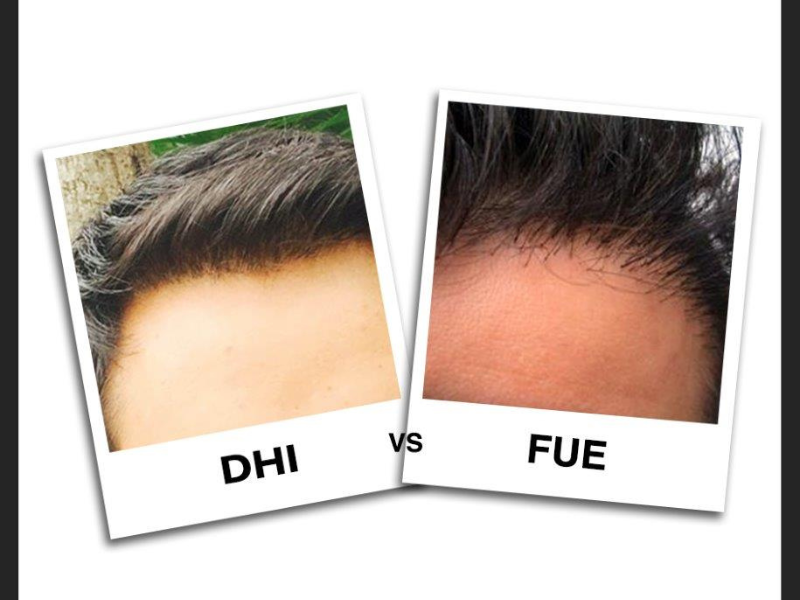
Choosing a hair transplant technique can be confusing, especially when terms such as FUE and DHI are often presented as completely different procedures. In reality, FUE primarily describes how hair follicles are harvested from the donor area, while DHI is commonly used to describe a method of implanting extracted follicular units using an implanter device.
So, which is better: FUE or DHI?
The answer depends on factors such as your pattern of hair loss, donor hair availability, scalp condition, number of grafts required, hairline design and the surgical approach selected by your hair transplant surgeon. There is no single technique that is automatically better for every patient. Current hair transplantation literature also emphasizes individualized patient assessment and surgical planning.
What Is FUE Hair Transplant?
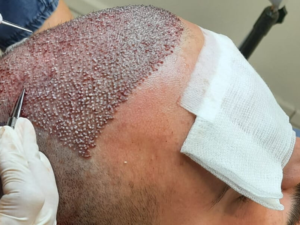
FUE stands for Follicular Unit Extraction, also called Follicular Unit Excision. In this approach, individual follicular units are extracted from the donor area using small punches and then prepared for transplantation.
Unlike strip harvesting, FUE does not involve removing a linear strip of scalp. Instead, the donor area contains multiple small extraction sites that generally heal as small scars.
FUE may be considered for people with pattern hair loss who have an adequate donor supply and are suitable candidates for hair restoration surgery.
How Does FUE Work?
A typical FUE hair transplant involves:
- Assessing the scalp and pattern of hair loss.
- Planning the hairline and recipient area.
- Preparing the donor area.
- Extracting individual follicular units.
- Preparing and preserving the grafts.
- Creating recipient sites.
- Implanting the follicular units into the planned areas.
- Providing postoperative instructions and follow-up.
The quality of the outcome depends on several factors, including patient selection, hairline planning, graft handling, extraction technique and surgical expertise.
What Is DHI Hair Transplant?
DHI usually refers to Direct Hair Implantation. The term is commonly used for an implantation technique in which extracted follicular units are placed into the recipient area using an implanter.
Importantly, DHI should not automatically be considered a completely separate hair transplant procedure from FUE. The International Society of Hair Restoration Surgery (ISHRS) notes that the term DHI is used in different ways and that it is not, by itself, a separate hair transplant method.
In practice, a procedure described as “DHI” may involve FUE for follicular-unit extraction followed by implantation with an implanter device.
FUE vs DHI: What Is the Difference?
The biggest difference is the part of the procedure the terminology describes.
| Factor | FUE | DHI |
|---|---|---|
| Meaning | Follicular Unit Extraction/Excision | Direct Hair Implantation |
| Main focus | Harvesting follicular units | Implanting extracted follicular units |
| Donor harvesting | Individual follicular units | Usually requires a separate extraction technique such as FUE |
| Implantation | Recipient sites may be created before graft placement | Implanter may be used for implantation |
| Hairline planning | Important | Important |
| Suitable for everyone? | No | No |
| Best technique | Depends on individual assessment | Depends on individual assessment |
Therefore, asking “FUE or DHI—which is better?” is not always the most useful way to approach hair transplant planning. A better question is: Which extraction and implantation approach is most appropriate for my hair loss pattern, donor supply and restoration goals?
Is DHI Better Than FUE?
Not necessarily.
DHI may offer certain procedural advantages in selected cases, particularly when an implanter is useful for the surgeon’s preferred implantation technique. However, it should not be assumed that choosing DHI automatically produces better or denser hair growth.
Hair transplant outcomes depend on multiple variables, including donor quality, graft selection, handling, recipient-site design, hairline planning, surgical technique and postoperative care. Current reviews describe both FUE and other established transplantation approaches as legitimate techniques whose selection should be individualized.
Which Is Better for a Natural-Looking Hairline?
A natural-looking hairline depends more on proper planning and surgical execution than simply choosing the label “FUE” or “DHI.”
The surgeon needs to consider:
- Facial proportions
- Existing hairline
- Age and anticipated future hair loss
- Donor hair availability
- Hair direction and angle
- Follicular-unit characteristics
- Density requirements
- Long-term hair restoration planning
The goal should be to design a hairline that is appropriate for the individual’s facial features and future hair-loss pattern rather than simply maximising the number of grafts transplanted.
FUE vs DHI: Which Is Better for Faster Recovery?
Recovery varies between patients and depends on the specific surgical technique, number of grafts, donor and recipient areas, and individual healing.
FUE is generally considered minimally invasive compared with strip harvesting, but it is still a surgical procedure and can involve temporary swelling, redness, discomfort, crusting and other postoperative effects. Complications, although uncommon, can occur and are influenced by both patient-related and technical factors.
The use of an implanter in a DHI-style procedure does not automatically mean that recovery will be faster for every patient.
FUE vs DHI for Large Areas of Hair Loss
For extensive hair loss, the most important considerations are often the available donor supply, the degree of baldness, the number of grafts required and long-term planning.
A surgeon may recommend a particular extraction and implantation strategy after evaluating the donor area and recipient region rather than selecting a technique solely because it is marketed as “advanced.”
In some patients, preserving the donor supply for future procedures can also be an important part of the treatment plan.
Who May Be a Candidate for a Hair Transplant?
Hair transplantation may be considered for selected patients with conditions such as androgenetic or pattern hair loss when there is an appropriate donor area.
However, not everyone experiencing hair loss should immediately undergo a transplant.
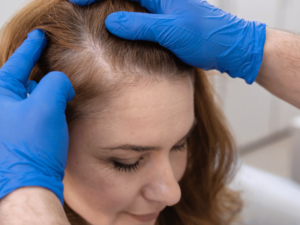
A proper evaluation may be needed to determine:
- The cause of hair loss
- Whether hair loss is stable or progressing
- Donor hair density
- Scalp health
- Hair calibre and follicular-unit characteristics
- Expected future hair loss
- Whether medical treatment should be considered before or alongside surgery
Hair transplantation is primarily used for pattern hair loss, but patient selection remains an important part of achieving an appropriate surgical plan.
How to Choose Between FUE and DHI?
Instead of choosing a procedure based only on its name, consider these questions during your consultation:
1. What is causing my hair loss?
The underlying cause should be identified before planning a transplant.
2. How strong is my donor area?
The donor area determines how many grafts may reasonably be available for transplantation.
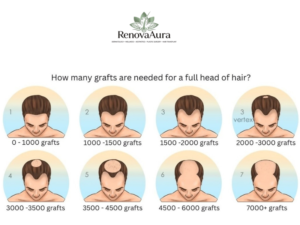
3. How many grafts do I actually need?
The required graft number depends on the size of the thinning or bald area, desired coverage and available donor hair.
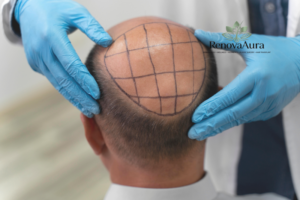
4. How should my hairline be designed?
Hairline design should account for facial characteristics, existing hair and future hair loss.
5. Who will perform the surgical steps?
Patients should understand who is responsible for the surgical aspects of their procedure. The ISHRS specifically advises patients to research their hair restoration surgeon and understand who will perform the surgery.
FUE vs DHI: The Bottom Line
There is no universal answer to whether FUE or DHI is better.
FUE primarily describes a follicular-unit extraction method, while DHI is commonly used to describe an implantation approach. In many cases, these terms can therefore refer to different stages of the same overall hair transplantation procedure rather than two completely separate procedures.
The appropriate approach depends on your hair-loss diagnosis, donor area, graft requirements, hairline design, scalp characteristics and the surgeon’s assessment.
For someone considering a hair transplant, the priority should be appropriate patient selection, realistic planning, safe surgical technique and long-term hair restoration strategy rather than choosing a procedure based solely on a technique label.
Frequently Asked Questions
Is FUE better than DHI?
Neither is automatically better. FUE refers primarily to follicular-unit extraction, while DHI commonly refers to an implantation approach. The appropriate technique depends on individual hair loss, donor supply and surgical planning.
Is DHI more advanced than FUE?
DHI should not automatically be considered a more advanced alternative to FUE. The terminology generally describes an implantation method, while FUE describes the extraction of individual follicular units.
Can FUE and DHI be used together?
Yes. A procedure may use FUE to extract follicular units and an implanter-based technique for their placement. The exact approach depends on the surgeon’s technique and the patient’s requirements.
Which is better for a natural hairline, FUE or DHI?
Neither technique alone guarantees a natural-looking hairline. Hairline design, follicular-unit selection, placement angle and direction, graft handling and surgical planning are important factors.
Is FUE painful?
FUE is generally performed under local anaesthesia, so significant pain during the procedure is not expected for most patients. Temporary discomfort or tenderness can occur after surgery.
How long does a hair transplant take to show results?
Hair growth after transplantation is gradual and varies between individuals. The timeline should be discussed with the treating surgeon rather than relying on a guaranteed number of months.
Does a hair transplant stop future hair loss?
No. A transplant does not necessarily prevent the progression of underlying hair loss in existing non-transplanted hair. A dermatologist may recommend medical management when appropriate.
Is hair transplant suitable for everyone?
No. A consultation is necessary to determine the cause of hair loss, donor availability, scalp health and whether transplantation is appropriate.
https://www.instagram.com/renovaaura.official
Mon to Sat 10:00 AM to 7:00 PM · Sun: 10:00 AM to 2:00 PM
C-3, 1st floor, Anand Vihar, New Delhi, 110092