
Dark patches, uneven skin tone, and pigmentation are common skin concerns, but not all pigmentation is the same. Melasma is one specific type of pigmentation that often appears as brown or grey-brown patches, particularly on the face. Understanding the cause of pigmentation is important because the right treatment depends on what is triggering it.
What Is Melasma?
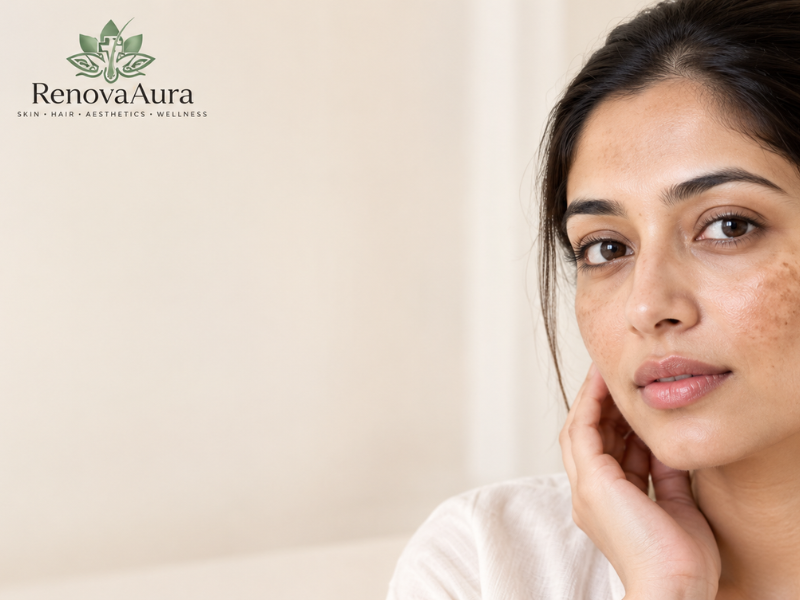
Melasma is a common pigmentation condition in which the skin produces excess melanin, leading to darker patches or uneven pigmentation.
It most commonly affects areas such as:
- Cheeks
- Forehead
- Upper lip
- Nose
- Chin
Melasma can affect anyone, but it is more commonly seen in women and people with darker skin tones. It can also become more noticeable after sun exposure.
Unlike temporary tanning, melasma can persist and may return even after it improves.
What Causes Melasma and Pigmentation?
Pigmentation can have several causes, and melasma is often influenced by a combination of factors.
1. Sun Exposure
Ultraviolet (UV) exposure can stimulate melanin production and make existing pigmentation more noticeable. Even after pigmentation improves, regular sun exposure can contribute to recurrence.
This is why sun protection is an important part of managing melasma and other pigmentation concerns.
2. Hormonal Changes
Hormonal changes can contribute to melasma in some people. It may develop or become more noticeable during pregnancy or with certain hormonal changes and medications.
This is one reason melasma is sometimes referred to as the “mask of pregnancy.”
3. Heat and Visible Light
For some people with melasma, heat and visible light may also contribute to pigmentation. Therefore, managing melasma may require more than simply avoiding direct sunlight.
4. Skin Inflammation
Inflammation caused by acne, irritation, or certain skin treatments can sometimes result in post-inflammatory pigmentation.
This type of pigmentation is different from melasma and needs to be assessed accordingly.
5. Genetics and Skin Type
Some individuals are naturally more prone to developing pigmentation because of genetic and biological factors.
Melasma vs Other Types of Pigmentation
Not every dark patch on the skin is melasma.
| Condition | Common Appearance | Possible Trigger |
|---|---|---|
| Melasma | Symmetrical brown or grey-brown patches | Sun, hormones, visible light and other factors |
| Post-inflammatory pigmentation | Dark spots after inflammation | Acne, irritation, injury |
| Sun spots | Localised brown spots | Cumulative sun exposure |
| Freckles | Small, flat pigmented spots | Genetics and sun exposure |
| Uneven tanning | Generalised darkening | UV exposure |
Because different pigmentation conditions can look similar, identifying the underlying cause is an important first step.
What Actually Helps Melasma?
There is no single treatment that works for every person with melasma. A dermatologist may recommend a combination of approaches depending on the type, severity, skin type, triggers, and previous treatments.
1. Consistent Sun Protection
Sun protection is one of the most important steps in managing pigmentation.
A dermatologist may recommend:
- Broad-spectrum sunscreen
- Regular reapplication when appropriate
- Protective clothing and shade
- Avoiding prolonged direct sun exposure
- Additional visible-light protection when appropriate
Skipping sun protection can make pigmentation harder to control and may increase the chance of recurrence.
2. Topical Treatments
Certain topical ingredients may help reduce excess pigmentation or improve uneven skin tone.
Depending on the individual case, dermatologists may consider ingredients such as:
- Azelaic acid
- Retinoids
- Vitamin C
- Hydroquinone
- Other pigment-targeting ingredients
The appropriate product depends on the person’s skin type, pigmentation pattern, sensitivity, and medical history.
Prescription treatments should be used under appropriate medical guidance rather than self-prescribed.
3. Chemical Peels
Chemical peels can be considered for selected pigmentation concerns. They work by encouraging controlled exfoliation of the skin and may help improve uneven pigmentation and skin texture.
However, stronger or inappropriate peels can irritate the skin and potentially worsen pigmentation, particularly in people who are prone to post-inflammatory hyperpigmentation.
The peel, strength, frequency, and suitability should therefore be determined by a qualified professional.
4. Laser and Light-Based Treatments
Certain laser and light-based procedures may be considered for specific pigmentation concerns.
However, melasma can be challenging because it may recur, and some procedures can cause irritation or post-inflammatory pigmentation in susceptible skin.
A treatment should therefore be selected after assessing the type and depth of pigmentation rather than choosing a laser simply because it is marketed as a pigmentation treatment.
5. Combination Treatment
In many cases, managing pigmentation involves more than one approach.
A dermatologist may combine:
- Sun protection
- Topical medication
- Chemical peels
- Selected laser or light-based procedures
- Treatment of underlying triggers
The goal is not simply to remove visible pigmentation temporarily but to control the factors contributing to it and reduce the likelihood of recurrence.
Can Melasma Be Completely Cured?
Melasma can often be improved, but it is considered a chronic and recurrent pigmentation condition in many people.
This means pigmentation may become lighter with appropriate treatment but can return, particularly when triggers such as UV exposure or hormonal changes continue.
A realistic treatment plan should therefore focus on long-term control and maintenance rather than promising permanent removal.
How Long Does Melasma Treatment Take?
The timeline varies from person to person.
Factors that can affect improvement include:
- Type and depth of pigmentation
- Skin type
- Duration of the condition
- Sun exposure
- Hormonal factors
- Previous treatments
- Consistency with prescribed skincare and sun protection
Some pigmentation may improve gradually over several weeks or months, while more persistent melasma may require longer-term management.
What Should You Avoid If You Have Pigmentation?
Trying too many aggressive products or treatments can sometimes make pigmentation worse.
It is generally better to avoid:
- Excessive exfoliation
- Harsh scrubs
- Unsupervised bleaching or prescription products
- Frequently changing active ingredients
- Aggressive procedures without professional assessment
- Ignoring sunscreen
If a product causes significant irritation, burning, or persistent redness, it is worth discussing the reaction with a dermatologist.
When Should You See a Dermatologist for Pigmentation?
Consider consulting a dermatologist if:
- Pigmentation keeps getting darker
- Dark patches repeatedly return
- Over-the-counter products are not helping
- You are unsure whether it is melasma or another pigmentation condition
- Pigmentation developed after acne or skin irritation
- You are considering chemical peels or laser treatment
- Your skin is becoming irritated from pigmentation products
A professional assessment can help identify the type of pigmentation and determine which treatment options are appropriate.
Can Home Remedies Remove Melasma?
Home remedies are often promoted for pigmentation, but there is limited evidence that common kitchen ingredients can reliably treat melasma.
Ingredients such as lemon juice or undiluted acids may irritate the skin and potentially worsen pigmentation.
A simple, consistent skincare routine with appropriate sun protection is generally a safer starting point than experimenting with harsh home remedies.
Is Sunscreen Really Necessary for Pigmentation?
Yes. Sun protection is a key part of pigmentation management.
UV exposure can stimulate melanin production and make pigmentation more noticeable. For people with melasma, visible light may also be relevant.
Using appropriate sunscreen consistently and taking additional sun-protective measures can support treatment and help reduce recurrence.
Melasma and pigmentation are not always the same thing, and the most effective treatment depends on the underlying cause.
Sun protection, appropriate skincare, topical treatments, chemical peels, and selected laser or light-based procedures may all have a role in managing pigmentation, depending on the individual.
If pigmentation is persistent, recurring, or difficult to identify, a dermatologist can assess the skin and create a treatment plan based on the specific type of pigmentation rather than relying on a one-size-fits-all approach.
For expert evaluation of pigmentation, melasma, acne-related pigmentation, and other skin concerns, Dr. Bhawna Bhardwaj, Senior Consultant Dermatologist & Hair Transplant Surgeon at RenovaAura, New Delhi, can assess the condition and guide an appropriate treatment approach.
Frequently Asked Questions
What is the main cause of melasma?
Melasma usually develops due to multiple contributing factors. Sun exposure, hormonal influences, genetics, visible light, and other triggers can play a role.
Can melasma go away on its own?
Melasma may become less noticeable in some situations, but it can persist or return. Long-term sun protection and appropriate treatment can help manage it.
What is the best treatment for melasma?
There is no single best treatment for everyone. Depending on the individual case, management may include sun protection, topical treatments, chemical peels, and selected procedures.
Can sunscreen reduce pigmentation?
Consistent sun protection can help prevent pigmentation from becoming darker and can support the effectiveness of pigmentation treatments.
Can chemical peels treat pigmentation?
Chemical peels may help selected types of pigmentation, but the type and strength of the peel should be chosen carefully to minimise irritation and the risk of post-inflammatory pigmentation.
Is laser treatment good for melasma?
Certain laser or light-based treatments may be considered in selected cases. However, melasma can recur, and inappropriate treatment may cause irritation or worsening pigmentation.
Can pigmentation come back after treatment?
Yes. Pigmentation, particularly melasma, can recur even after improvement. Long-term maintenance and trigger management are important.
How can I know whether I have melasma or another type of pigmentation?
A dermatologist can examine the distribution, appearance, history, and possible triggers of the pigmentation to determine the most likely cause and recommend appropriate management.
Can acne cause pigmentation?
Yes. Acne-related inflammation can leave dark spots known as post-inflammatory hyperpigmentation. These marks are different from melasma and may require a different treatment approach